A shorter version of this is on LinkedIn. This is the full thought.
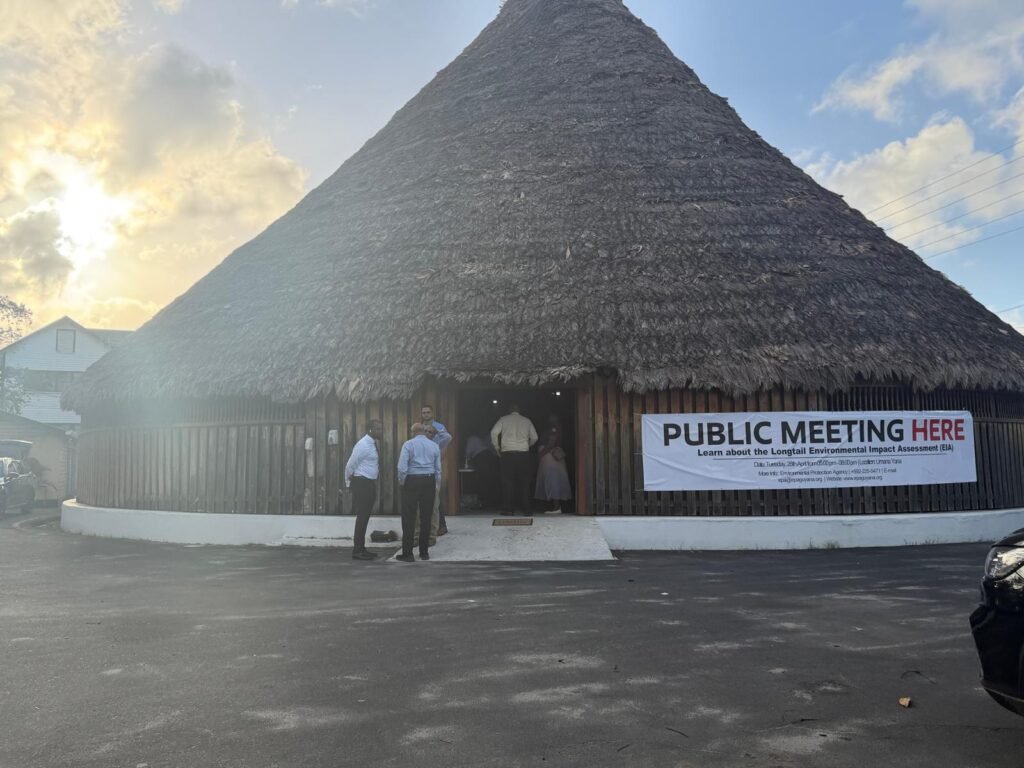
A few weeks ago, I attended a public disclosure meeting for the Longtail Project — ExxonMobil’s offshore oil and gas development in Guyana — held at the Umana Yana in Georgetown. What I experienced while there is what prompted this piece.
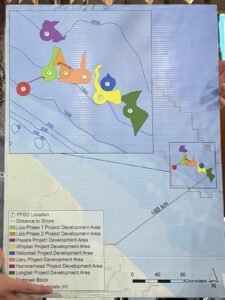
In my career so far, I’ve been in plenty of rooms where some of the most consequential decisions about money, resources, and livelihoods were being explained to — or about — the people most affected by them.
From serving as a volunteer income tax preparer in Trenton, NJ, often translating for Spanish-speaking patrons, to applying for grants for my non-profit where the greatest natural resource is defined as human capital, to sitting in public disclosure meetings for oil and gas projects and watching attendees try to make sense of what they were hearing, my consistent takeaway has been this:
If you’re not speaking the same language, you’re not making an impact.
I don’t mean language in the literal sense only. I mean the language of context, culture, and design.
I’ve watched explanations fail — not because the information wasn’t there, but because the document, the flyer, the disclosure packet, or otherwise was never built with the end user in mind.
For instance, Environmental Impact Assessments — mandatory planning and decision-making tools that predict the environmental, social, and economic impacts of proposed projects like oil and gas developments — are sometimes THOUSANDS of pages long.
They’re written to satisfy regulators, meet international standards, and withstand legal scrutiny. But what they’re generally not built to do is communicate to a 16-year-old aspiring sustainability professional the impact a project will have on their future. Or clarify to a grandmother in an indigenous village whether the fishing water her family has used for generations will be contaminated. Or explain to someone without context for the disclosure process what their attendance and participation are actually supposed to accomplish for their community or country.
When words like “irreversible,” “insignificant impact,” and “negligible change” have precise technical meanings in EIA methodology — to a person or community with historical reason to distrust extractive projects, those same words mean something entirely different. “Insignificant” and “negligible” don’t “translate” to small or temporary. They can mean unimportant. Permanent. Something taken and not coming back.
That disconnect isn’t a communication failure. It’s a design failure. And it’s one that repeats itself across every extractive context I’ve encountered — be it oil and gas, mining, or infrastructure — across the Caribbean and the broader Global South.
The public disclosure process exists for a reason. It is the legal and ethical mechanism through which members of a community are supposed to meaningfully engage with decisions that affect them.
When the language of a technical process (such as an EIA) is inaccessible or misunderstood, a meeting about it becomes a formality.
Participation becomes a checkbox.
The community walks away with more anxiety than information.
And the company walks away having technically complied with disclosure requirements, without ensuring that community members reach full comprehension and ease.
But it doesn’t have to be this way. This is solvable.
- Plain-language and translated (when applicable) glossaries should be embedded in public-facing materials and made available to community members well before any disclosure meeting takes place.
- Disclosure event design should be built around genuine comprehension, not regulatory optics.
- Community readiness studies should be conducted to anticipate the questions people will actually ask, and to determine whether facilitators are prepared to answer them in ways that don’t generate more alarm than clarity.
This is the kind of work that sits at the intersection of energy expertise and community trust.
It requires understanding both the technical content and the cultural context of the community receiving it, and I haven’t seen enough of it.
The absence of “culturo-technical” literature and education has real consequences for communities, for companies, and for the integrity of technical processes themselves — because communication design should be taken as seriously as compliance.
This realization is the kind of thing that reaffirms that my building Green Quotient Solutions was necessary to support intersections like this.
A compliance meeting with attendees does not mean successful disclosure, and community attendance to these events doesn’t mean equitable comprehension.